
History
Samuel, 13-year-old Paint horse gelding, presented to Animal Imaging for magnetic resonance imaging (MRI). He has a +/- 3-year history of bilateral grade 3/5 forefeet lameness that improves 90% to diagnostic anesthesia of the abaxial sesamoidean nerves with suspect navicular or soft tissue injury based on previous radiographs and ultrasound. He presented for MRI based on the desire by the referring veterinarian and the owner to qualify the degree of pathology for prognostic treatment planning.
The images collected in the studies are shown below.
Image Descriptions
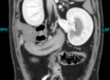
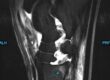
MRI uses multiple image sequences that highlight different tissue and pathology types both in how the cross-section images are collected and the degree of blacks, grays, and whites that are created on the images. The image on the left is a sagittal image, or an image slicing vertically through the midline of the toe through the heel bulbs. These images are repeated until the entire hoof is sliced through both medially (through the inside) and laterally (through the outside) of the foot. The use of sagittal images allows for looking at cartilage thickness, the flexor surface of the navicular bone, and the amount of inflammation within the joints. As you can see with the blue arrow, this image highlights the cyst of the navicular bone in this patient.
The image on the right is a transverse image. This slicing is cut as if you were parallel to the ground and is shown by the green line on the image on the left where the image has shown the cut through. This image sequence allows for detailed examination of the interior and border of the tendons, joint surfaces, and bone detail. The red arrow shows damage to the deep digital flexor tendon on this image.
Left front foot:

When looking at the right front foot, the images showed a similar lesion in the transverse section of the deep digital flexor tendon as you can see with the blue arrow on the image on the right. The image on the left shows black bone, different than that of the other collected images. This sequence is a STIR sequence, which turns the bone black and any areas of fluid bright white in color. This sequence allows the veterinary team to visualize any areas of increased fluid within the bone or within any joints. The red arrow shows a moderate increase in fluid of the coffin joint, or the lower most joint of the horse’s limb. The purple arrow shows an example of fluid, or bone bruising, within the navicular bone on this limb.
Right front foot:


Discussion
This case provided a great example of how excellent patient selection is key to obtaining high quality standing MRI images. This horse was very patient and stood very still while the images were being collected for his MRI, and it is represented in the quality of study shown here. As you can see, each sequence is necessary in its own way to provide information to the veterinary team about different parts of the anatomy and areas for them each to become damaged. Standing MRI is a modality that allows for advanced cross-sectional imaging in horses that otherwise would be high risk for anesthesia and recovery. The veterinary imaging team often uses standing sedation and blocking (or numbing) of the legs to improve the patient’s experience during the MRI, hoping to improve the patient’s compliance during these scans. Given that multiple sequences of value must be collected for complete information on each region, the study can take several hours per region to complete based on the patient’s compliance.
Standing MRI is a modality that allows for a comprehensive 3D study of the anatomy of the horse’s lower leg without the need for general anesthesia. This modality allows for more accessibility of advanced imaging to the general equine population. Please do not hesitate to contact our team for any additional questions concerning the use of standing MRI for your horse.