
History
William is a 15 year old Warmblood gelding with a recent history of right sided facial swelling. William was referred to Animal Imaging for the use of the standing CT to evaluate the skull in fine detail to search for a cause of the swelling. On presentation to Animal Imaging, William had a firm swelling extensively down the right side of his face, with right sided clear nasal discharge and protrusion of the right eye with blepharospasm.
Imaging Findings
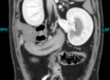
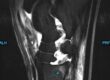
At Animal Imaging, William was sedated to affect and images were acquired. The gelding was found to have a very large, expansile, complex mass of mixed soft tissue, fluid and mineral attenuation effacing the caudal half of the right nasal passage and the entirety of the right paranasal sinuses. There was heterogeneous lysis and mild leftward deviation of the osseous septum as well as marked cortical thinning, mild periosteal reaction and moderate heterogeneous lysis throughout the right maxilla. The origin of the mass appeared to be an approximately 5.6 cm in diameter, heterogeneous, spiculated, mineralized mass associated with the lingual root of tooth 111.


Conclusion
William was diagnosed with a large, extensive, aggressive mass of the right nasal passage and paranasal sinus most consistent with odontogenic tumor associated with 111 such as amelioblastoma. A amelioblastic carcinoma or another neoplastic process was not excluded, but histology would be needed for a definitive diagnosis.
Amelioblastomas are a rare, slow-growing, locally invasive tumor type arising from odontogenic epithelial cells (ameloblasts) of the teeth. Horses with this tumor type tend to present with nonpainful, firm, bony swellings palpated externally over the dental arcades. When the tumor is caught early, surgery is the treatment of choice. Amelioblastomas arising from teeth in the mandible can be removed with hemimandibulectomy or rostral mandibulectomy depending on location with good cosmetic and functional outcomes. Radiation therapy has not been described for amelioblastomas in horses.